Search Posts

Showing posts with label Reviews. Show all posts

Wednesday, April 04, 2007

28 DAYS LATER... - Bitesize Review # 15

28 DAYS LATER... **½

UK: Danny Boyle, 2002.
Format: Original Theatrical Release

Note: My bitesize review was originally published by the Kent Messenger Newspaper Group (5.12.2002) and refers to the theatrical run of the film.

Director Danny Boyle has struggled to match the power and originality of his first two features Shallow Grave and Trainspotting. In his latest effort, 28 Days Later... the protagonist Jim, played by impressive newcomer Cillian Murphy, awakens from a coma to find his London hospital devastated and empty. Outside the capital itself is deserted.

When Jim meets Selena (Naomie Harris) we learn a fatal and highly contagious virus called "Rage" has all but transformed Britain into a post-apocalyptic war zone. The virus locks the infected into a permanent state of murderous rage. After joining up with Frank (Brendan Gleeson) and his young daughter Hannah (Megan Burns) the desperate band set off to salvage a future.

28 Days Later... is effectively a contemporary reworking of the zombie movie sub-genre of horror. Writer Alex Garland, author of bestselling novel The Beach, manages to create characters for which the audience feels sympathy and director Boyle employs his repertoire of frenetic action shots with enthusiasm and gusto.

However, one can't help but feel disappointed overall when the film begins so intriguingly only to lose its way later on. Not least in its finale, whereby, a digression into a military run prison facility leaves one feeling they have watched two halves of separate films sewn together with the thread highly visible to all.

THEY - Bitesize Review # 14

THEY ***

USA: Robert Harmon and Rick Bota, 2002.
Format: Original Theatrical Release

Note: My bitesize review was originally published by the Kent Messenger Newspaper Group (28.11.2002) and refers to the theatrical run of the film.

All too often modern horror films consist of inferior imitations of Wes Craven's self-reflexive genre movie Scream. Teen slashers I Know What You Did Last Summer, Urban Legend and other such tripe are devoid of quality acting suffer from weak storylines and are simply not scary. Thankfully, They takes a detour from this depressing trend to deliver a slick and disturbing chiller.

Up coming actress Laura Regan (My Little Eye) plays Juliet Lund – an opinionated and prosperous twenty-something studying for a Master's Degree in Psychology. However, Juliet's focused and ordered life begins to unravel after she witnesses the suicide of life-long friend Billy.

Haunted by the deceased's intense ravings about persecution at the hands of an unknown force from his childhood nightmares, Juliet suffers insomnia. Her mental health is further threatened when she too experiences a reoccurrence of the 'Night Terrors' she suffered as a young child.

Convinced the mysterious "They" Billy warned of are now closing in on her, Juliet seeks the advice of child psychiatrist Dr Booth. Recalling the context of Juliet's childhood nightmares, Dr Booth dismisses these episodes as the result of post-traumatic stress originally relating to the death of her father and now resurfaced due to her friend's suicide.

With this rational diagnosis of her symptoms, Juliet tries to return to her normal life. Unfortunately, as her 'Night Terrors' become more violent Juliet finds herself isolated and alone in a fight to save her own sanity.

POSSESSION - Bitesize Review # 13

POSSESSION ***

USA/UK: Neil LaBute, 2002.
Format: Original Theatrical Release

Note: My bitesize review was originally published by the Kent Messenger Newspaper Group (7.11.2002) and refers to the theatrical run of the film.

Adapted from A.S. Byatt's Booker Prize winning novel of the same name, Possession focuses on the efforts of American research assistant Roland Michell (Aaron Eckhart) and qualified academic Maud Bailey (Gwyneth Paltrow) to unveil a secret love affair between two 19th century poets.

The investigation begins with the discovery of love letters written by the esteemed Randolph Henry Ash (Jeremy Northam) addressed to lesser-known Christabel LaMotte (Jennifer Ehle), a descendent of Maud's.

Recorded in history as a devout and honourable husband, the suggestion Ash could have been involved with Maud's relative is a revelation of such magnitude to rock the literary world. As Roland and Maud piece together the events surrounding this illicit romance their own relationship begins to mirror the passion and anguish of their subjects.

Disappointingly, neither love story smacks of real sexual energy despite the accomplished acting of the cast. In truth the pacing of the film is hampered by the constant cutting between the affair of the past and the potential romance of the present.

This suggests Possession is better as a book than a film. Although the difficult task of cramming all of Byatt's powerful novel into a two-hour film is one that was always going to compromise the rich texture of the story.

In saying that, LaBute's script still contains some resonant observations with regard to the lure and turmoil inherent to love. The fragile romance of the modern couple is restricted by their own personal apprehensions, a stilting confinement not dissimilar to that of the inflexible social mores of their forebears.

RED DRAGON - Bitesize Review # 12

RED DRAGON **½

USA/Germany: Brett Ratner, 2002.
Format: Original Theatrical Release

Note: My bitesize review was originally published by the Kent Messenger Newspaper Group (24.10.2002) and refers to the theatrical run of the film.

Anthony Hopkins' portrayal of Dr. Hannibal Lecter has seen the serial killer with a taste for human flesh become modern cinemas most memorable villain. In Red Dragon, Hopkins third and final appearance as Lecter, we are taken back to the very beginning and witness the arrest of the brilliant but psychological disturbed psychiatrist.

Adapted from the first of Thomas Harris' Lecter novels, Red Dragon establishes a storyline very similar to the subsequent The Silence of the Lambs. A sexual serial killer known as the "Tooth Fairy", played by Ralph Fiennes, has killed two entire families leaving the FBI without any firm leads. Incarcerated in a high security prison Lecter becomes a consultant on the case.

Reuniting Lecter with the man responsible for his capture, detective Will Graham, played by Edward Norton, the film echoes the one-on-one sparring between Lecter and Clarice Starling. Unfortunately, the tension and intimacy of those meetings, so key to the success of Silence of the Lambs, are never recaptured and what is left instead is the exaggerated, all too knowing performance of Lecter first displayed by Hopkins in Ridley Scott's Hannibal.

Indeed, it could be suggested Red Dragon is at its most thrilling when Lecter is left to ponder events from within his cell, while the action centres on detective Graham analysing the crime scenes. Graham has a special if not welcome ability to get inside criminal mindset of killers such as the "Tooth Fairy". However, it is unavoidable not to come to the conclusion that we have seen all these narrative elements before – most notably in Michael Mann's original film adaptation of this novel by Thomas Harris, Manhunter – and this is perhaps where Red Dragon disappoints the most.

The former film was a dark and brooding thriller which intelligently handled the motivation behind the "Tooth Fairy" and his frenzied acts of murder. Manhunter also went much further and more assuredly into detective Will Graham's psychological connection with Hannibal Lecter. Such subtlety and menace is never reproduced in Red Dragon with the resulting re-telling of this story being a solid but decidedly average crime thriller.

Tuesday, April 03, 2007

MY LITTLE EYE - Bitesize Review # 11

MY LITTLE EYE ***

UK/USA/France/Canada: Marc Evans, 2002.
Format: Original Theatrical Release

Note: My bitesize review was originally published by the Kent Messenger Newspaper Group (17.10.2002) and refers to the theatrical run of the film.

The hottest ticket in television at the moment is the reality TV game show. Whether it is Big Brother, Survivor or the latest 'Pop Star' themed karaoke contest, our desire to play the voyeur has developed into an obsession.

This trend is even more pronounced on the internet with a seemingly endless amount of web cam sites dedicated to broadcasting live 24 hours a day, seven days a week regardless of programme content. My Little Eye from British director Marc Evans employs this very modern phenomenon to breathe new life into the classic haunted house horror narrative.

The plot is simplicity itself, five youngsters agree to be confined in an old house, in the middle of nowhere, for six months with the object of winning one million dollars. Cameras are installed in every room with all the action broadcast live on a subscription pay-per-view website.

However, the situation begins to take on sinister dimensions when our young hopefuls are haunted by aspects of their troubled past. This tension is built upon in the film when it is suggested the broadcast company itself, may be instigating a deadly game in an effort to boost ratings or provoke the housemates into leaving and thus forfeiting the prize money.

Disappointingly, this sense of terror is lost when the plot's finale slips into a series of violent killings, showing little of the assured craftsmanship of the film's beginning. The redeeming aspects of My Little Eye can be identified in its authentic look and superb use of sound.

The majority of the film is shot in a manner mimicking the zooming cameras of reality television. This helps to establish an atmosphere of 'being watched' eeriness from the start. The distorted infra-red night sequences are especially effective with the participants' eyes glowing a startling shade of green.

So while My Little Eye isn't without its flaws it does provide a gripping watch for most of its duration. Moreover, the film serves as a chilling verdict on our attraction to the nature of watching and reality television.

ROAD TO PERDITION - Bitesize Review # 10

ROAD TO PERDITION ****

USA: Sam Mendes, 2002.
Format: Original Theatrical Release


Note: My bitesize review was originally published by the Kent Messenger Newspaper Group (10.10.2002) and refers to the theatrical run of the film.

After enjoying immediate success with the multi-Oscar winning American Beauty, the level of expectancy surrounding English director Sam Mendes and his latest project Road to Perdition has been immense.

Tom Hanks plays Michael Sullivan, a respected and loyal member of an organised crime family run by John Rooney (Paul Newman). In the past, Sullivan has managed to shelter his wife and two young sons from the violent reality of his life

When Michael Jr witnesses a cold-blooded murder committed by Connor Rooney (Daniel Craig), the young boy's life is put in jeopardy and his trust in his father is put in doubt. A bungled heist kills Sullivan's wife and younger son. Determined to avenge the killing of his family, Sullivan flees with Michael Jr to Chicago.

Although the film is a tale of crime, revenge and gangland violence, it is the relationship between Sullivan and his son Michael Jr that provides much of the depth of the film. Road to Perdition is undoubtedly one of the year's most accomplished pictures and the best thing presently showing at mainstream cinema.

Wednesday, September 27, 2006

NEW SECTION: REVIEWS


Hello visitors,


I have been exploring my new beta blog recently and have set-up a new section called simply "Reviews". By adding posts under this label I hope to build up a body of reviews for a variety of films. Essentially, these film reviews will be divided between 'bitesize reviews' of typically 250-500 words and longer pieces titled 'full reviews' of upwards of 1, 000 words. The former will act as a brief account of my immediate response to a particular film and be spoiler free, whilst alternatively the latter will more often than not contain spoilers and act as a more in depth consideration of the film in question.

You will see I have started to add posts to this thread using existing reviews I wrote for the Kent Newspaper Group. As a result these films are 3 or 4 years old but this was simply to get the REVIEWS section up an running. In the future I will be adding both 'bitesize reviews' and the more substantial 'full reviews' for contemporary films released theatrically and existing releases on DVD.

Your opinions are welcome, so please feel free to leave comments about the new REVIEWS section or a particular review.


Best wishes


The Count

Tuesday, September 26, 2006

THE RING - Bitesize Review # 9

The Ring ***
USA/Japan: Gore Verbinski, 2002.
Format: Original Theatrical Release


Note: My bitesize review was originally published by the Kent Messenger Newspaper Group and refers to the theatrical run of the film.

It is the ultimate video nasty. A mysterious tape that once watched causes the telephone to ring and a voice announces you only have seven days to live.

Dismissed as an urban myth until four teenagers die at the same time, on the same day in different locations. All are reported to have watched the videotape and all are found with their faces contorted in terror.

Disturbed at these circumstances journalist Rachel (Naomi Watts) decides to investigate. Unable to fight her curiosity she watches the short piece of film footage. It depicts a nightmarish but seemingly meaningless array of images. However, just as foretold the telephone rings and the week deferred death sentence is pronounced.

It is as though the footage has encoded in its celluloid, the prolific curse of an otherworldly force of evil. Rachel is plagued by hallucinations of a little girl. Soon both her son Aidan (David Dorfman) and ex-boyfriend Noah (Martin Henderson) become exposed to the videotape’s insidious power.

The Ring is essentially a Hollywood remake of Hideo Nakata’s critically acclaimed original. Arguably the most frightening horror film in recent memory ‘Ringu’ became a phenomenal success on its 1998 release in Japan.

This film with its bigger budget polish and computer effects is invariably going to suffer comparison with the original. Surprisingly, The Ring is a far more accomplished remake than you would expect. And does try to capture the mood and ambience of its source.

There are a few plot differences in this version, making the film feel longer and less intense than the lean ‘Ringu’. However, the premise is so chilling that it remains deeply unsettling.

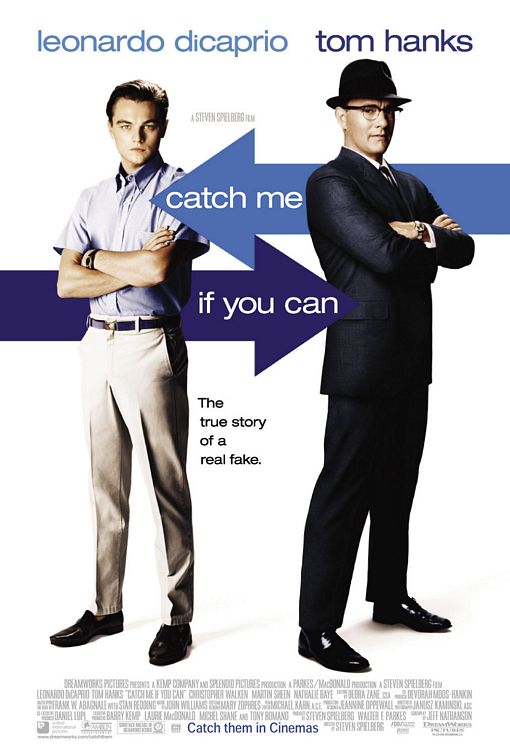
CATCH ME IF YOU CAN - Bitesize Review # 8

Catch Me If You Can ****
USA: Steven Spielberg, 2002.
Format: Original Theatrical Release


Note: My bitesize review was originally published by the Kent Messenger Newspaper Group and refers to the theatrical run of the film.

Inspired by the real life antics of Frank Abagnale Jr., this Steven Spielberg film tells of how a teenager went onto become America’s most famous conman.

Frank (Leonardo DiCaprio) has been brought up in a privileged family but his world begins to unravel, when the IRS investigate his father Frank Abagnale Sr., played by Christopher Walken. Unable to secure a bank loan his father can do nothing as his business, house and car are taken from him. A devastated Frank runs away when he learns his parents are getting divorced.

Desperate to bring the family back together Frank sets out to re-claim the wealth and prosperity they once enjoyed. Posing first as a pilot, then a doctor and a lawyer, the audacious trickster skilfully forges cheques around the world enabling him to raise millions of dollars.

Not surprisingly his exploits attract the attention of the FBI’s fraud department, with Special Agent Carl Hanratty (Tom Hanks) determined to catch Frank and bring him to justice.

Released amidst an already impressive list of high profile films Catch Me If You Can would have to be something pretty special just to claim some attention. Thankfully it is, as Spielberg gets straight to the heart of the material, celebrating its unabashed humour without excluding the darker father/son tensions.

The acting throughout this impressive cast is of the highest standard. Significantly, DiCaprio captures the ‘best of his generation’ form of his earlier career going some way to answer those critics who felt he was less than convincing in Gangs of New York.

A thoroughly entertaining film, Excellent!

CHICAGO - Bitesize Review # 7

Chicago ***
USA/Germany: Rob Marshall, 2002.
Format: Original Theatrical Release


Note: My bitesize review was originally published by the Kent Messenger Newspaper Group and refers to the theatrical run of the film.

This big screen version of the world famous musical has recently enjoyed success at the Golden Globes and looks set to follow such accolades with Oscar recognition come march.

Set amidst the bright lights and glitz of 1920’s Chicago, Roxie Hart (Renee Zellweger) dreams of becoming a star. An average housewife in reality, she is transfixed by the glamour and fame of Vaudeville stage acts such as ‘The Kelly Sisters’.

This desperation to break into showbiz leads her to have an affair with Fred Cassely (Dominic West), who promises to put her on the road to stardom. However, when Roxie discovers she has been deceived her rage brings her to commit murder.

Sent to prison Roxie is amazed to find hard times have also befallen the celebrated Velma Kelly (Catherine Zeta-Jones). The performer is accused of murdering both her husband and co-starring sister after learning of their infidelity.

Tension soon grows between the established star and the wannabe, as not only do they both face hanging for their crimes, even worse Roxie’s infamy becomes front-page news pushing Velma’s waning profile further into the shade.

Hotshot defence lawyer, Billy Flynn (Richard Gere), is the mastermind behind the media circus surrounding Roxie’s plight. However, being Velma’s legal representation also, it begs the question will he be committed to getting them both off or merely fuelling the press frenzy to satisfy his own ego?

Utilising the singing and dancing skills of his two female leads, director Rob Marshall, allows the songs to take centre stage delivering both spectacle and humour. Moreover, this narrative style, aided by the quite brilliant choreography, captures the atmosphere and ambience of a night out at a show. Enjoy!

DAREDEVIL - Bitesize Review # 6

Daredevil *
USA: Mark Steven Johnson, 2003.
Format: Original Theatrical Release


Note: My bitesize review was originally published by the Kent Messenger Newspaper Group and refers to the theatrical run of the film.

Matt Murdock (Ben Affleck) is a man without fear. Blind since a childhood accident involving biochemical waste, his remaining senses develop to an incredible capacity. Following the murder of his father, Matt uses his enhanced abilities to combat the injustice blighting New York. A lawyer by day he lurks amongst the cities shadows when night comes, ready to punish the guilty in the guise of superhero vigilante ‘Daredevil’.

This is the premise of the latest comic book movie blockbuster. Perhaps less well known than fellow Marvel Comics creations Spider-Man and the X-Men, Daredevil adheres to an easily recognised formula.

Plagued by the isolation caused by his double life, our selfless crusader doubts his ability to make a difference. Enter love interest ‘Electra’ (Jennifer Garner) a martial arts expert with a similar quest to avenge the killing of her own parents.

Michael Clarke Duncan is evil crime lord ‘Kingpin’ suspected of masterminding these atrocities. There is also the customary henchman provided in the form of Colin Farrell’s deranged assassin ‘Bullseye’.

Director Mark Steven Johnson attempts to infuse the tired genre with a fresh spark telling the story using a flashback. Unfortunately, the plot remains disappointingly familiar. Matt’s superhero alter ego ‘Daredevil’ is defined through special powers of heightened perception and athleticism, derivative of both Spiderman and The Flash. The film also burrows largely from The Crow and The Matrix in terms of visual style and imagery without reproducing any of their quality.

The original comic was acclaimed for its dark storylines and emotional complexity. Sadly, Daredevil the movie contains neither pathos nor conviction.

DIE ANOTHER DAY - Bitesize Review # 5

Die Another Day**
USA/UK: Lee Tamahori, 2002.
Format: Original Theatrical Release

Note: My bitesize review was originally published by the Kent Messenger Newspaper Group and refers to the theatrical run of the film.

Pierce Brosnan returns for his fourth outing as the world’s most famous super-spy and before you can say “opening set-piece extravaganza”, Bond is once more attempting to thwart the Machiavellian designs of an unhinged villain.

In the demilitarised zone between North and South Korea, Bond infiltrates a rogue North Korean army unit posing as a diamond smuggler. However, before Bond can assassinate the corrupt Colonel Moon (Will Yun Lee) he is captured and his true identity discovered, forcing him into a desperate attempt at escape.

The scene thus set Die Another Day delivers the first of its numerous action sequences consisting of the standard explosions, bloody shoot-outs and the crowning glory of a high-octane hovercraft chase. Defying the laws of gravity, not to mention credibility, Bond manages to get clear of the out of control vehicle whilst his pursuer, Col. Moon, careers over the edge of the cliff.

However, Bond survives only to be taken prisoner by Moon’s aggrieved father, General Moon (Kenneth Tsang) of the North Korean army. Abandoned by MI6 and subjected to severe physical torture, Bond is eventually traded with British intelligence in return for the release of dangerous terrorist Zao (Rick Yune).

Accused by boss M (Judi Dench) of compromising the security of the organisation, Bond has his 007 license terminated and is told he is no use to anyone.

Enter ellipsis, for when we next see Bond his startling appearance and subsequent aspects of the film’s storyline would suggest he has been incarcerated for sometime. Unfortunately, like all Bond films plotting is second to action and these intriguing avenues of enquiry are abandoned in favour of the exotic location of Havana, Cuba.

Bond tracks the released Zao to a genetic clinic where he appears to be undergoing skin pigment transformation ‘ala’ Michael Jackson. Joined in his endeavours by fiery U.S. agent Jinks (Halle Berry) Bond uncovers a link between Zao’s treatment and diamond baron, media darling Gustav Graves (Toby Stephens).

Anxious not to reveal too much and thus spoil some of the films twists and surprises it is amble to say Graves’ public image serves only to mask his true ambitions. Using the ability of diamonds to absorb light he creates the world’s deadliest weapon, ‘Icarus’ capable of focusing the power of the sun on any part of the earth.

With Bond the only man capable of saving the world, Die Another Day is predictably, predictable. Fans of the franchise with no doubt take comfort in this adherence to convention, although it doesn’t help when a vacuous and implausible script is stretched to a film that is far too long.

The Brosnan Bond movies have seen producers attempt to counter claims Bond has become an anachronism in the 21st century. The modern Bond film, if the isn’t a misnomer, has seen the inclusion of more influential bond girls and a more knowing persona adopted in the performance of Ian Fleming’s 007 agent.

However, this modernising trend is a difficult and dangerous trick to pull off, as the appeal for aficionados of this loved British institution resides within its dated familiar formula. Die Another Day remains true in spirit to the Bond myth but retirement is surely in sight.

THE GOOD GIRL - Bitesize Review # 4

The Good Girl ***½
USA/Germany/Netherlands: Miguel Arteta, 2002.
Format: Original Theatrical Release


Note: My bitesize review was originally published by the Kent Messenger Newspaper Group and refers to the theatrical run of the film.

Tired of her reputation as the pretty one from U.S. sitcom Friends, Jennifer Aniston plays depressed and ordinary Justine Land in this ‘indie’ comedy drama.

Working as a discount store cashier in small-town Texas, Justine idles away her time wondering where her hopes and dreams went. Inspiration is lacking at home too with simpleton husband Phil (John C. Reilly), spending every night stoned on the couch in the company of best pal Bubba (Tim Blake Nelson).

Dissatisfied with her life, Justine finds herself drawn into a passionate affair with Jake Gyllenhaal’s (Donnie Darko) intense and angst-ridden outsider, Holden Worther. In an affectionate nod toward Gustav Flaubert’s Madame Bovary, Justine is soon confronted with the harsh reality her reckless actions bring to pass. Although her attempt to reclaim some vitality of her life may be borne from a deep sense of personal isolation, the chain of events that ensue from her actions promise serious ramifications for everyone in her life.

Jennifer Aniston’s affected accent is hard to overlook initially, as we struggle to accept the actress as anything other than Rachel from Friends. However, to her credit only the harshest critic could fail to be convinced by her impressive display.

Aniston squeezes out every nuance from Justine’s feelings of imprisonment, the men around her offer nothing but demands, to fine-tune a wonderfully emotional and yet subtle performance. I for one earnestly hope she is able to work on other scripts in the future that allow her to further subvert her dominant star image.

The rest of the ensemble cast are also given the chance to shine thanks to a strong script from Mike White and the unobtrusive direction of Miguel Arteta. Most notable in this regard is newcomer Zooey Deschanel, who provides some great humorous moments as Justine’s misbehaving work colleague Cheryl.

Possibly a little dull for some compared to the monster mainstream releases currently showing, The Good Girl doesn’t have any grandiose pretensions. It is instead a well-observed, earnest reflection of life that is both dark and funny.

FINAL DESTINATION 2 - Bitesize Review # 3

Final Destination 2 **½
USA: David R. Ellis, 2003.
Format: Original Theatrical Release


Note: My bitesize review was originally published by the Kent Messenger Newspaper Group and refers to the theatrical run of the film.

The idea of death being a malevolent force that actively hunts you down is chilling to the extreme. Sadly, like the original Final Destination, this sequel turns a potentially innovative premise into little more than a series of elaborate death scenes.

The death knell begins after Kimberly (Ali Larter) has a premonition whilst waiting at the on road of a motorway. In a bid to prevent the loss of life she has foreseen Kimberly blocks the entrance. When the forecasted pile-up occurs attention turns to the explosion of Flight 180 and the events of the original movie.

Just as before, the intended victims begin to meet with freak and fatal accidents. Afraid they have incurred the grim reaper’s wrath by cheating death, Kimberley and the remaining car crash survivors unite in an effort to stay alive.

Best described as a fair ground ride, Final Destination 2 delivers its thrills through the most basic shock tactics. The half-realised efforts of the first film to build tension and atmosphere are never even attempted in the sequel. The one concern is to orchestrate a number of potentially dangerous circumstances, before executing the action with quite gratuitous relish.

I won’t deny Final Destination 2 is easily digested confectionary for the eyes. Its extensive servings of blood-soaked gore, accompanied by gallous humour will not fail to make you grimace and guffaw. It just disappoints expectations for anything other than the average fair that’s come before.

Final verdict: Little to recommend it other than more of the same for fans of the original.

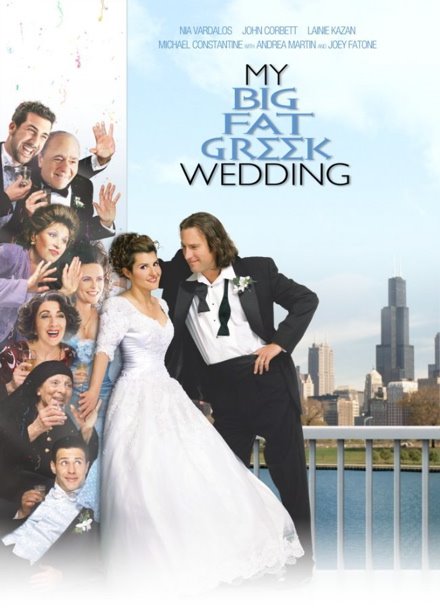
MY BIG FAT GREEK WEDDING - Bitesize Review # 2

My Big Fat Greek Wedding **½
USA/Canada: Joel Zwick, 2002.
Format: Original Theatrical Release


Note: My bitesize review was originally published by the Kent Messenger Newspaper Group and refers to the theatrical run of the film.

This comedy of opposing cultures has enjoyed considerable success at the U.S box office leaving producers Tom Hanks and wife Rita Wilson hoping for a similar response here in the U.K.

Brought up in Chicago by her traditional Greek family Toula (Nia Vardalos) is expected to honour her heritage by marrying a nice Greek boy and having several nice Greek children. However, much to her father’s despair (Michael Constantine) Toula has reached the age of thirty still single, living at home and working in the family restaurant.

Determined to gain some independence, Toula begins a college computer course and soon transforms herself from a dowdy waitress into an attractive and successful travel agent. It is in this role that she meets handsome teacher Ian Miller, played by John Corbett of Sex and the City fame. The blossoming romance that follows is marred by one small problem Ian isn’t Greek!

The ensuing sequence of events shows how the devoted couple attempt to facilitate the opposing aspects of their families’ backgrounds. It is here that most of the film’s humour is delivered, not least when Ian’s white upper-class parents are overwhelmed by the antics on display at an Easter party hosted by Toula’s family.

With a running time of an hour and a half My Big Fat Greek Wedding does not offer the same depth of characterisation or drama present in other inter-racially themed movies, such as East is East. Instead the film’s simplicity of plot allows for a warm hearted viewing experience with a steady flow of good lines. Director Joel Zwick reinforces this strength of the film with his conventional composition of shots and non-obtrusive camera movements.

Although the happy ending may be a tad too sentimental for some the memorable gags spread throughout the cast make each one of Toula’s opinionated relatives a joy to watch. If enjoyable family entertainment is what you seek I guarantee you won’t be disappointed.

SOLARIS - Bitesize Review # 1

Solaris ***½


USA: Steven Soderbergh, 2002.
Format: Original Theatrical Release


What exactly is Solaris? That is the question soon set up in this psychological drama and arguably it is what we are still left pondering at the end credits.

Set in a non-specific but recognisable future, psychiatrist Dr Chris Kelvin (George Clooney) is sent to a space station observing the newly discovered planet known as Solaris. All but two of the crew have either died or disappeared leaving the doctor to try and piece together some sense of what is going on.

The surviving crewmembers offer little in the way of information aside from a fragmented account of the appearance of mysterious ‘visitors’. Chris diagnoses that they are both suffering from acute paranoia brought on by isolation and fatigue. However, soon the doctor himself is confronted with the resurrection of his dead wife Rheya (Natascha McElhone).

What follows is not the romance in space you may have expected. Instead director Steven Soderbergh departs from his recent trio of high profile Hollywood hits Erin Brockovich, Traffic and Ocean’s 11 to craft a science fiction film similar in spirit to the classic 2001: A Space Odyssey.

Chris reunion with his deceased wife leads him to acknowledge the complexities of their relationship and his own guilt surrounding her passing. Employing his superb visual sense and precise editing, Soderbergh energises a slow methodical film that questions our notions of love, memory and self-determination.

Clooney and McElhone are magnificent as the lovers trying to come to terms with the discrepancy between what is real and what is remembered. The approaching Solaris and its growing influence upon those onboard the space station is all that can be known for certain.
For more information see: